Solutions · By industry
Start with the building, not the box.
The site type decides the hardware, the access control and the billing. A condo garage and a delivery depot need different answers, even when the charger looks the same.
01 / By industry
Four site types. Four operating models.
Pick the one that sounds like your building. Each route ends at the same question: who charges, who pays, and how it grows.
02 / Multifamily & condo
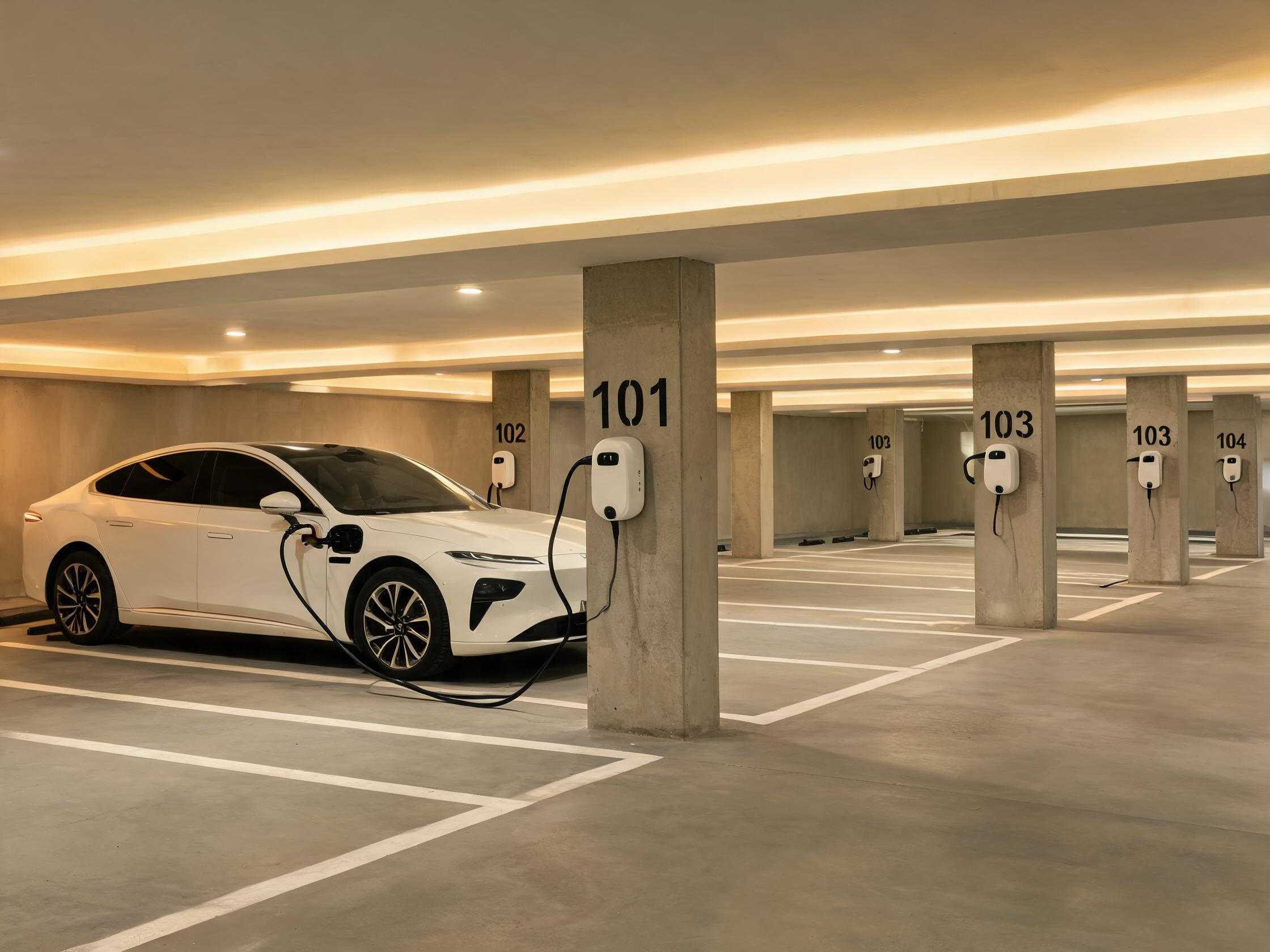
Residents charge. The building decides how.
A shared garage is not a driveway. Access, metering and cost recovery have to be settled before the first stall is wired, or the first dispute arrives with the first bill.
We scope the hardware around the building you already have: existing panels, parking layout and the way residents actually park. Where capacity is tight, the conversation moves to load management and a phased rollout rather than a full service upgrade.
- Access limited to residents and authorised staff.
- Metering that keeps resident use separate from house load.
- Capacity added in phases, so idle stalls do not carry hardware.
03 / Workplace
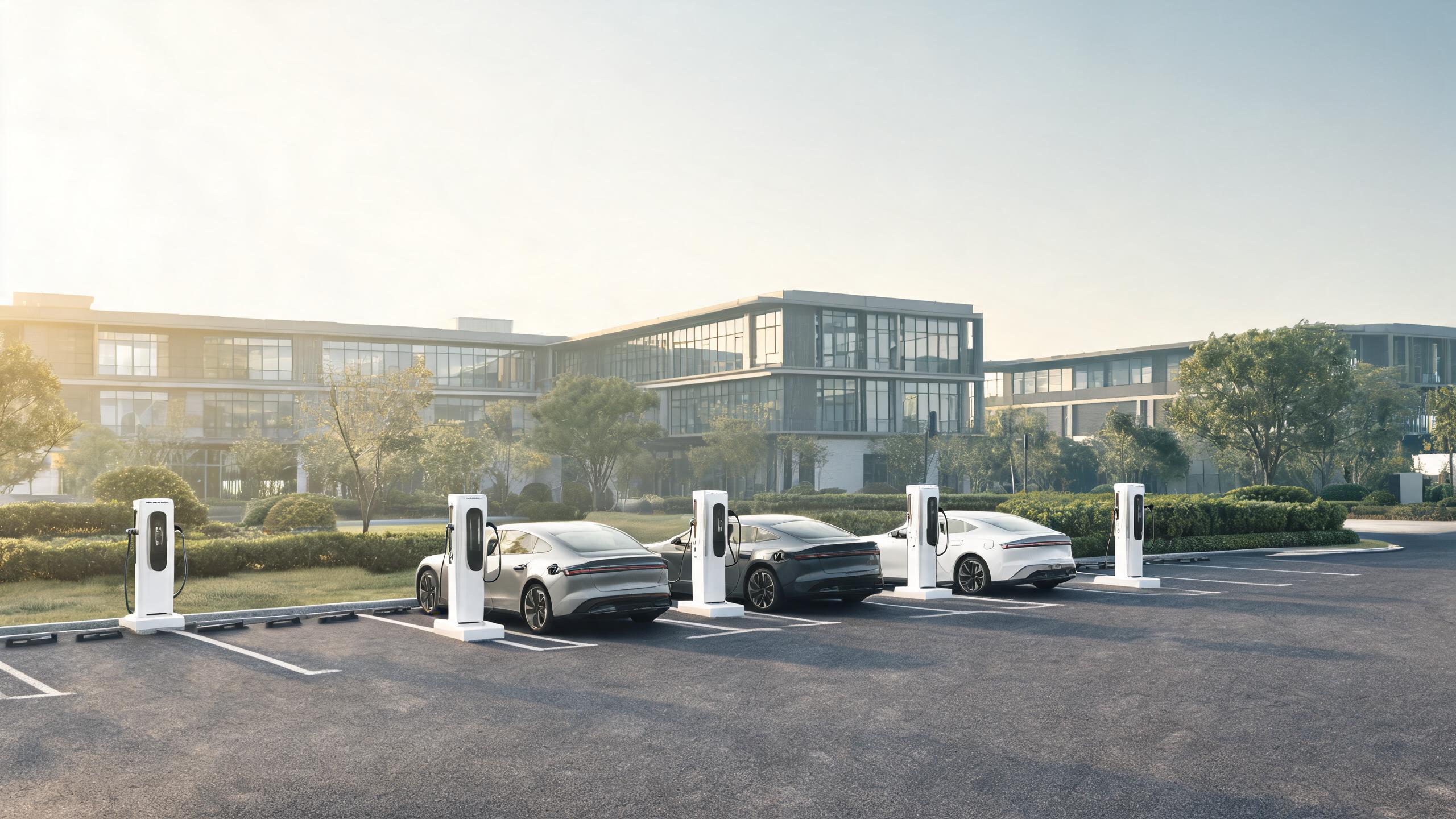
A staff benefit with rules attached.
Workplace charging works when the policy is written first. Who is eligible, whether the employer pays, and how a visitor gets a session are decisions, not defaults.
We can scope shared stalls, reserved stalls or a mix of both, with access control that fits the policy you choose and the hardware and software options we can support. If the building also hosts tenants, the split between landlord-funded and tenant-funded hardware is set out in the quote.
04 / Fleet & logistics
A depot is a schedule, not a car park.
Vehicles come back at known times and leave at known times. The charger layout has to fit that rhythm, not the other way round.
We plan around arrival windows and dwell time: AC where a vehicle sits overnight, DC where a top-up has to happen between runs. Mixed sites are normal. The quote separates hardware, installation and the service arrangement, so uptime responsibility is explicit rather than implied.

05 / Retail & destination
Dwell time is the product.
A destination site sells time. Charging either uses that time or competes with it.
For a retail host, the question is turnover: how long a car stays, whether the stall is shared, and who collects the fee. The host and tenant split matters as much as the hardware, because it decides who owns the asset, who sets the price and who pays for maintenance.

06 / How we scope a site
Four steps, in this order.
The order matters. Skipping the electrical review is how projects get expensive after the hardware is ordered.
Site intake
Building type, stall count, parking layout and who drives in and out. We also ask what charging is meant to do here: recover cost, attract tenants, keep staff, or serve customers.
Electrical review
Service size, spare capacity and panel locations. Load management is considered at this stage, with your electrical contractor or engineer. We do not size a service from a photo.
Hardware & access
AC or DC, wall or pedestal, shared or reserved. Access control, metering and billing are chosen together, because one decision constrains the others.
Quote & schedule
A written scope that separates hardware, installation and software. Dates follow permits, utility work and site readiness, so we publish them once those are understood.
07 / Next step
Tell us what the building is.
Send the site type, the stall count and a photo of the electrical room if you have one. We will come back with a hardware shortlist and the questions that still need answers.

Canadian EV charging for homes, buildings and fleets — certified hardware, documented quality, and support that stays local.
© 2026 Novus Volt Inc. · Toronto, Ontario