Buying guide · Updated November 2026
How to choose a home EV charger in Canada.
Most people start with the charger and work backwards. The better order is: the car, the overnight window, the panel, the circuit, then the unit. This guide walks through that sequence with the arithmetic you can check yourself.
A Level 2 charger is a fairly dumb device: it tells the car how much current is available, and the car takes what it can. That single sentence explains most of what follows. The charger does not decide the charging speed — the car’s onboard charger and the circuit do, and the wall unit only sets the ceiling.
1. Start with the car, not the charger
Every EV has an onboard charger that converts AC to DC before it reaches the battery. Its rating is a hard limit. A car with a 32A onboard charger will never draw 48A, no matter what the wall unit is rated for. Buying the larger unit is not wrong — it may help the next car — but it will not make tonight’s charge faster.
Two other vehicle-side facts matter more than people expect:
- Battery size. A 60 kWh battery and a 100 kWh battery have very different overnight needs. The bigger battery does not need a bigger charger; it needs more hours, or a faster one if the hours are fixed.
- The taper. Charging slows above roughly 80% state of charge. If your routine is “plug in at 30%, unplug at 80%”, the last part of the curve is not where the time goes.
The practical question is not “what is the fastest charger” but “how many kWh do I need to add between two plug-ins, and how many hours do I actually have?”
2. The overnight arithmetic
Power is amps × volts. At a nominal 240V supply, a 40A output is about 9.6 kW and a 48A output about 11.5 kW. Multiply by the hours the car is parked and you get the energy added — before losses of roughly 5–10%, which are real but rarely decisive.
| Output current | Power at 240V | Energy in 8 hours | Range added (5.5–6.5 km/kWh) | Circuit required |
|---|---|---|---|---|
| 16A | 3.8 kW | ~30 kWh | ~165–195 km | 20A dedicated |
| 24A | 5.8 kW | ~46 kWh | ~255–300 km | 30A dedicated |
| 32A | 7.7 kW | ~61 kWh | ~340–400 km | 40A dedicated |
| 40A | 9.6 kW | ~77 kWh | ~420–500 km | 50A dedicated |
| 48A | 11.5 kW | ~92 kWh | ~505–600 km | 60A dedicated |
Illustration only. A charger is a continuous load, so the circuit is sized at 125% of the output current — that is why a 40A unit needs a 50A circuit and a 48A unit needs 60A. Range figures assume 15–18 kWh/100 km; use your own consumption if you track it.
Read that table against a typical week. A driver covering 60 km a day needs roughly 10–12 kWh a night, which even a 16A unit covers in three hours. A driver covering 250 km a day needs about 40 kWh, which is five hours at 40A. Most Canadian households land in the first group and buy for the second — which is fine, as long as they know they are buying headroom rather than necessity.
3. What your panel can actually give
This is the constraint that decides the real answer, and the one a website cannot resolve for you. A 100A service feeding a house with electric heat, a dryer and an oven may have very little spare capacity. A 200A service usually has room. The way to know is a load calculation, not a guess about the size of the panel cover.
When headroom is short, there are three legitimate paths, and they are not equally expensive:
- Derate the charger. A 48A-capable unit can be set to 32A or 24A. You lose speed and keep the panel. Many units support this in configuration; confirm the setting is recorded at commissioning.
- Add load management. A device that watches the service and reduces charger current when the house is near its limit. This is how a dense older neighbourhood adds charging without a service upgrade, and it is common in multi-unit buildings.
- Upgrade the service. The most expensive path, and the one to rule out last rather than first. It also brings permit and utility coordination with it.
Any of these can be right. What is not right is ordering a 48A unit against a panel that cannot feed it and discovering the problem on install day, when the electrician is already on site.
4. Hardwired or NEMA 14-50
Both are legal and common. The choice is about current ceiling, portability and how the connection behaves over ten winters.
| Consideration | Hardwired | NEMA 14-50 outlet |
|---|---|---|
| Maximum output | Up to 48A on a 60A circuit | Usually 40A on a 50A circuit |
| Connection quality | Permanent, no plug to wear or heat-cycle | Plug and receptacle must be industrial grade and correctly torqued |
| Portability | Unit stays with the house | Unit can be unplugged and moved |
| Typical fit | Outdoor, detached garage, long-term install | Indoor garage, rental, or a unit you may take with you |
| Watch for | Requires a licensed electrician and a permit where required | Some jurisdictions require GFCI protection on the receptacle; cheap receptacles are a known failure point |
If you are choosing for a home you intend to stay in, hardwired is usually the better long-term answer. If you rent, move between properties, or want to take the unit to a cottage, the outlet earns its compromises.
5. Connector: J1772, NACS, and adapters
North America is mid-transition on connectors. J1772 is the older AC standard and still what most non-Tesla vehicles use. NACS is Tesla’s connector, now being adopted natively by more manufacturers and by charging networks.
In practice, either connector works for most households, because adapters are simple and passive for AC charging:
- J1772 charger, Tesla vehicle: a J1772-to-NACS adapter, which Tesla has historically supplied with the car. It works and it is not a compromise on speed.
- NACS charger, J1772 vehicle: the reverse adapter. Fine for a single-car household, more awkward if two drivers share one unit and neither keeps the adapter in the car.
The decision rule: buy the connector that matches the car you own today, and confirm the adapter situation for any second vehicle. Do not buy for a car you might own in 2031 — the standards will have moved again by then.
6. Cold, cable and mounting
Canadian installations put demands on a charger that a datasheet from a warmer market does not describe:
- Cable in real cold. Charging cables stiffen well below freezing. A cable that coils neatly at 20°C can be awkward at −25°C, which matters if the run is tight or the hook is high.
- Enclosure rating. Outdoor units should carry a proper outdoor rating (NEMA 4 or 4X is the usual reference for weather and corrosion). An indoor-rated unit under an eave is not the same thing.
- Moisture and ice. Water that gets into a connector body and refreezes is a real failure mode. Mounting height, drip loops and a holster that drains matter more than they sound.
- Cable reach. Measure from the mounting point to the charge port on the car, in the position you actually park. Twenty-five feet sounds generous until the car is nose-in and the port is rear-left.
7. Check the rebate before you choose
Eligibility can eliminate a model entirely. BC and Quebec both work from published lists of qualifying equipment, and some programs require pre-approval before the work starts. Three questions, in this order:
- Is this exact model on my province’s eligible list today?
- Does the program require approval before installation?
- Does my municipality or utility add a top-up with its own conditions?
Our Canadian rebate overview sets out what each province pays and the mistakes that cause refusals. It is worth ten minutes before an order, not after.
8. What a quote should contain
A quote that says “installation from $X” is a marketing document. A quote you can act on answers these questions in writing:
- Which model, which output setting, and which circuit size will be installed?
- Is the work hardwired or on an outlet, and who supplies the receptacle?
- Who pulls the permit, and is the inspection included?
- What is the cable route, and does it require wall penetrations or conduit?
- Is commissioning included — a real charge session, firmware check and a record of the settings?
- What happens if the panel turns out to have less headroom than assumed?
- Which documents will be issued for the rebate claim?
If two of these are missing, the price is not comparable to anything.
9. The five expensive mistakes
- Buying 48A for a 100A panel without a load calculation, then discovering the derate after the unit arrives.
- Choosing on price alone and ending up with a unit that is not on the provincial eligibility list.
- Installing before checking pre-approval, which can void the rebate permanently.
- Mounting by eye instead of measuring cable reach from the actual parking position.
- Leaving commissioning undocumented, so the first fault becomes a warranty argument instead of a settings question.
The right charger is the one your panel can feed, your car can accept, and your province will still pay for.
That is the whole buying decision. Everything else — app features, load balancing, colour — is a preference, not a constraint.
The 60-second version
1. Check your car’s onboard charger rating.
2. Work out kWh needed per night.
3. Get a load calculation, not an opinion.
4. Pick hardwired or 14-50.
5. Match the connector to the car.
6. Confirm the rebate before ordering.
Two models, one decision
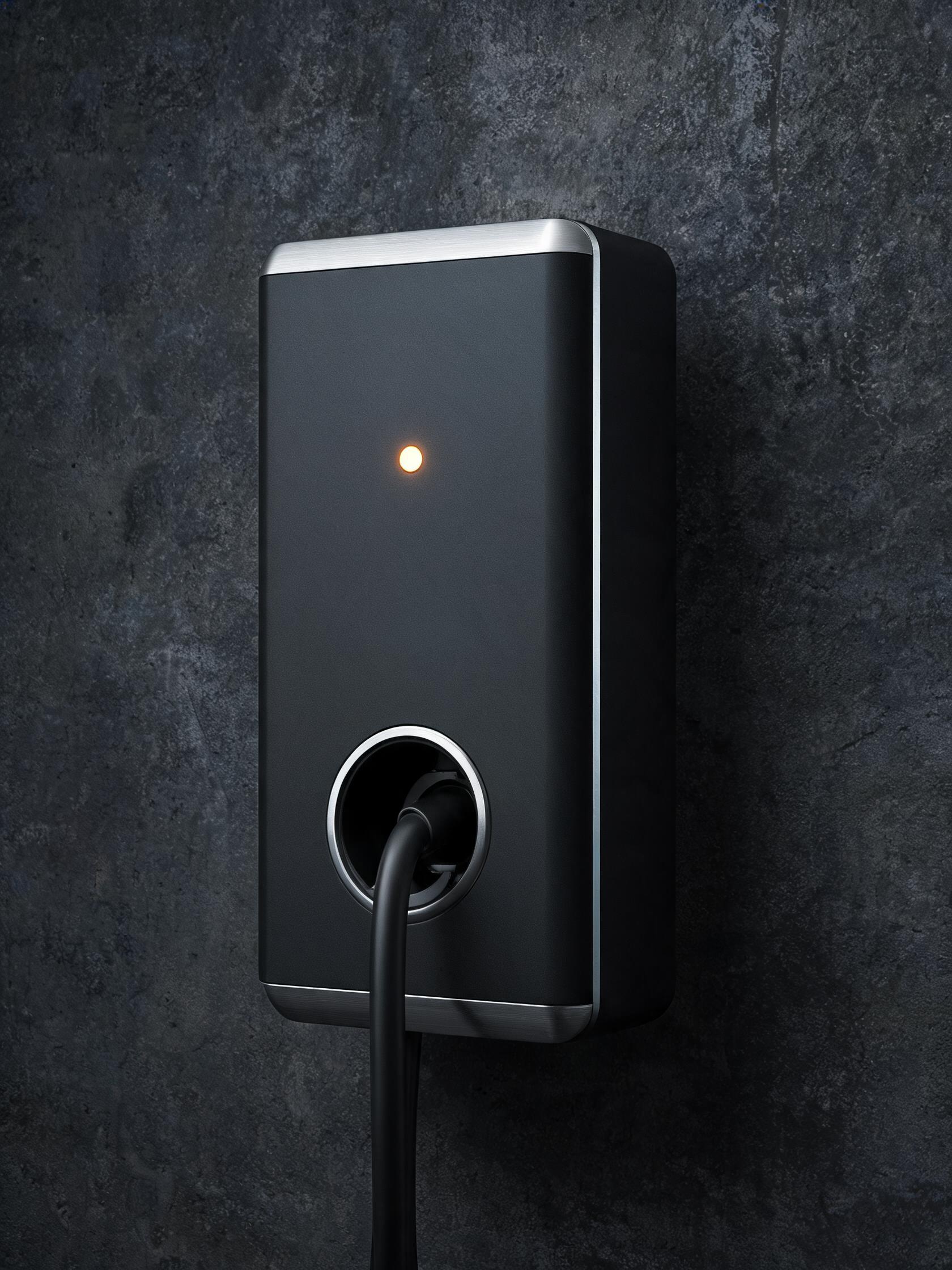
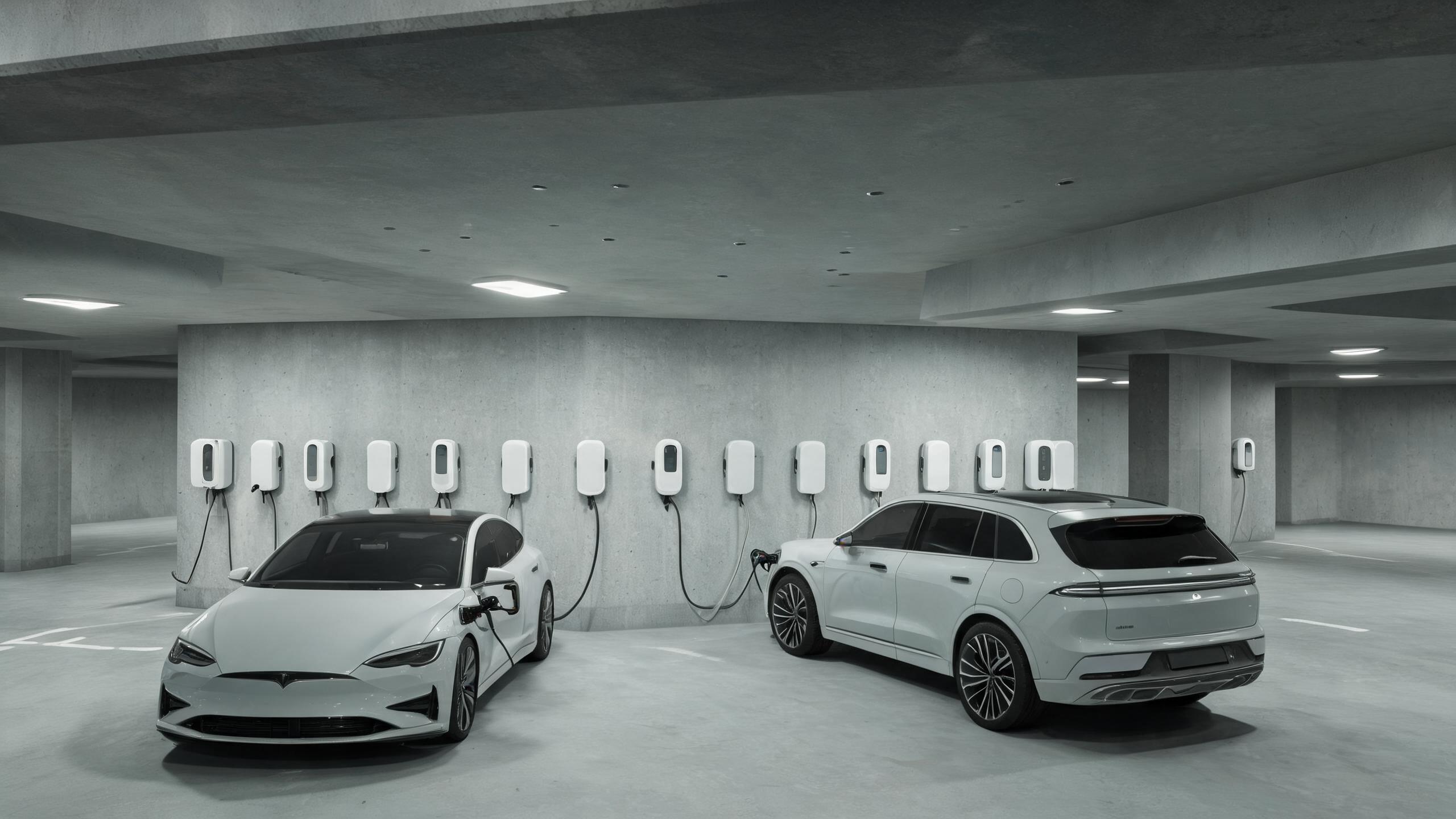
The Standard 40A is the default for a typical overnight window. The Ultra 48A is for larger batteries or a shorter window — where the panel allows it.
Questions
What people ask after reading this.
Related
Next, the two practical steps.

The default for a typical Canadian overnight window, on a 50A circuit.
More headroom for larger batteries or a shorter charging window.
Service capacity, breaker space, cable route and permits — the inputs behind a real quote.
Next step
Get the panel question answered first.
Send a photo of your panel and the model you are considering. A site check confirms circuit size, cable route and whether your province’s rebate applies to that exact unit — before you order.

Canadian EV charging for homes, buildings and fleets — certified hardware, documented quality, and support that stays local.
© 2026 Novus Volt Inc. · Toronto, Ontario