Home · February 2026
Choosing between 40A and 48A at home
Our two retail models are rated 40A and 48A. The difference in nameplate output is real, but it is rarely the deciding factor. Panel capacity, the hours you actually have overnight, and the size of the battery in the car settle this more often than the specification sheet.
Both units are AC home chargers from the same Canadian brand, sold with a refundable deposit and an optional professional installation. The choice between them comes down to whether the extra output shortens your charging time in practice — and whether your electrical service can carry it without an upgrade.
The headline number is not delivered energy
A 48A charger delivers more power than a 40A charger, and over a fixed window it adds more energy. What matters is whether that extra energy shortens the time your car spends charging. If the vehicle finishes on the smaller unit before you go to bed, the additional output buys nothing that night.
If the car arrives late and leaves early, or starts the evening at a low state of charge, the difference can be significant. The useful comparison is not the nameplate figure. It is the energy you need per night against the hours you actually have, measured on your own commute rather than on someone else’s.
The panel gets a vote
Every charger circuit is a continuous load, and electrical codes treat continuous load more conservatively than intermittent load. That means the branch circuit and breaker must be sized above the charger’s rated output, and the panel needs both the spare capacity and the physical room for that breaker.
A 48A unit asks more of the service than a 40A unit. On an older home with a modest service, the 40A model is often the one that fits without an upgrade, while the 48A model may require one. Whether your service can support either model is To be supplied until an electrician has looked inside the panel. The price difference between the two units is also To be supplied, but it is rarely the main variable once installation is included.
Overnight window and battery size
The practical question is how much driving you need to recover between getting home and leaving again. A short commute and a long overnight window is a case where the smaller unit is entirely adequate. A long commute, a large battery, or an off-peak tariff that ends in the early hours all push toward more output.
Two vehicles sharing one charger change the arithmetic. The effective window is halved, because both cars need to finish before the household leaves. That is the most common situation where 48A earns its place in a driveway.
Where 48A makes sense
Three patterns justify the Ultra 48A: a long daily drive, a vehicle that frequently arrives with a low state of charge, and a household that must recover a full charge inside a short off-peak window. A fourth is future-proofing for a next vehicle with a larger battery — a legitimate reason, provided the panel can carry it today and you accept that you are paying now for capacity you may use later.
The Ultra 48A page lists the configuration details we can confirm. If any of those three patterns describes your week, it is worth pricing the higher-output model alongside the installation, because the circuit work is the same either way.
The decision in one line
If the panel supports it and your overnight window is tight, choose 48A. If the panel is tight, the commute is short, or the car finishes early regardless, choose 40A and put the difference toward installation or a second circuit. The Standard 40A page covers that model, and the home AC overview compares both.
Either unit carries the same program terms: a rebate of 3¢/kWh on eligible charging sessions, stepping to 11¢/kWh after 1,500 kWh cumulative. That credit can change under the program terms, so it is not a reason to oversize the hardware. Match the charger to the load your household can genuinely use.
Buy the amperage your panel and your week can actually use. Anything above that is capacity you have paid for and may never draw.
Start at the panel
Standard 40A and Ultra 48A are the same family with different output. The comparison starts with the service, then the overnight window — not the brochure.
This note is editorial. Circuit sizing and service capacity are confirmed by a licensed electrician on site.
Related notes
More from the floor.
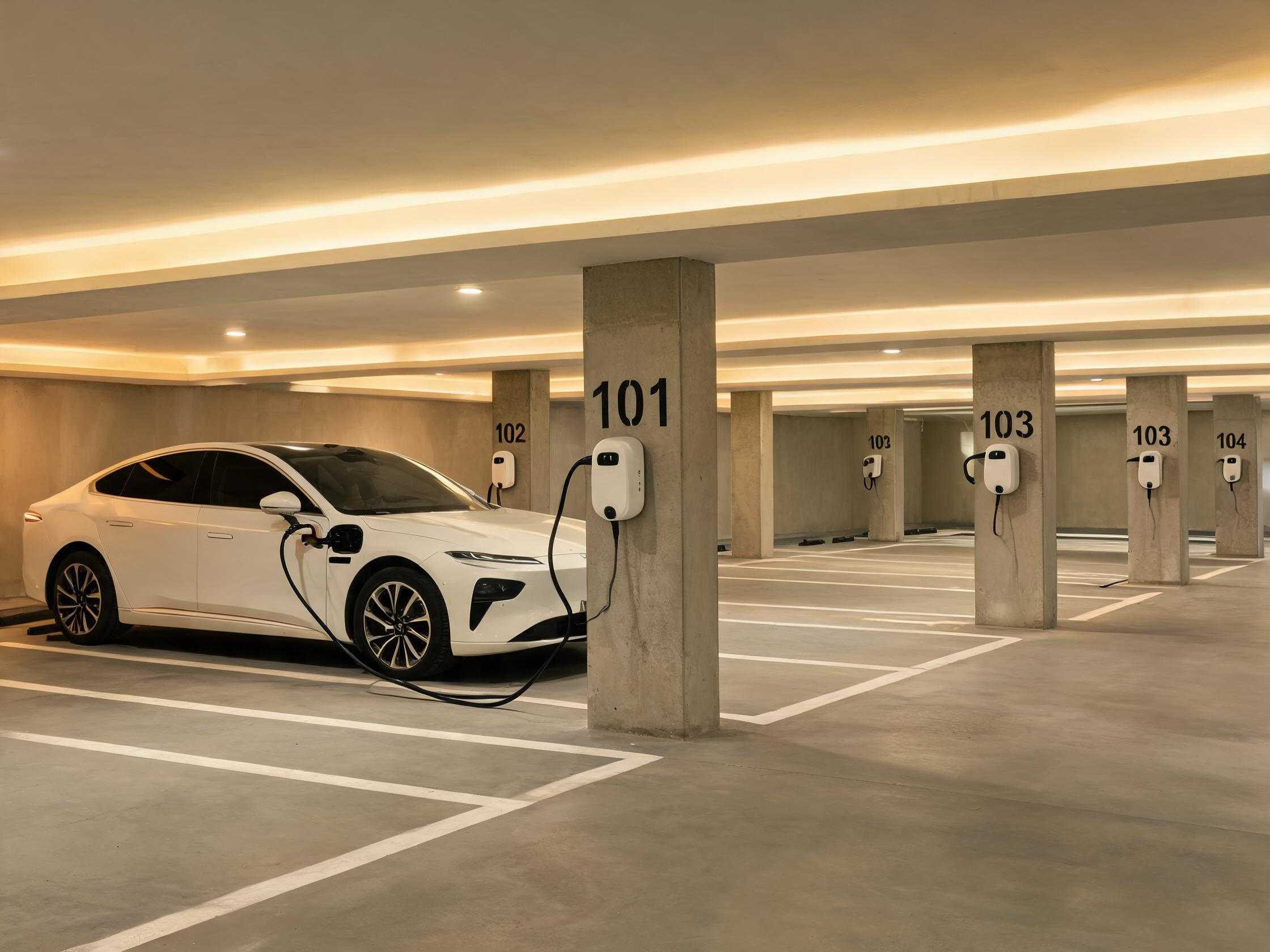
Load calculations, metering strategy and resident access decide scope long before a charger is specified.

How a federal credit market funds the charging rebate, and why the rate is not a fixed return.

Duty cycle and dwell time decide whether DC fast is the right tool or an expensive answer to the wrong question.
Next step
Still deciding on amperage?
Send a photo of your panel and a rough description of your commute. We will tell you which of the two retail models is the practical starting point.

Canadian EV charging for homes, buildings and fleets — certified hardware, documented quality, and support that stays local.
© 2026 Novus Volt Inc. · Toronto, Ontario